

So, you want a steady and reliable source of passive income? Renting is a great way to earn a regular source of passive income. Research done by Grandview projects that the real estate market, which was valued at USD 3.69 trillion in 2021, will have a CAGR of 5.2% between 2022 and 2030.
But then you could always be an Airbnb host. In theory, you will make more income because you will always have lots of short-term renters. But life rarely works according to theory. So, read this article if you are wondering which option is better in the renting vs. Airbnb debate. It will answer your most pressing questions.
Short-Term Rentals May Be On The Rebound in 2026
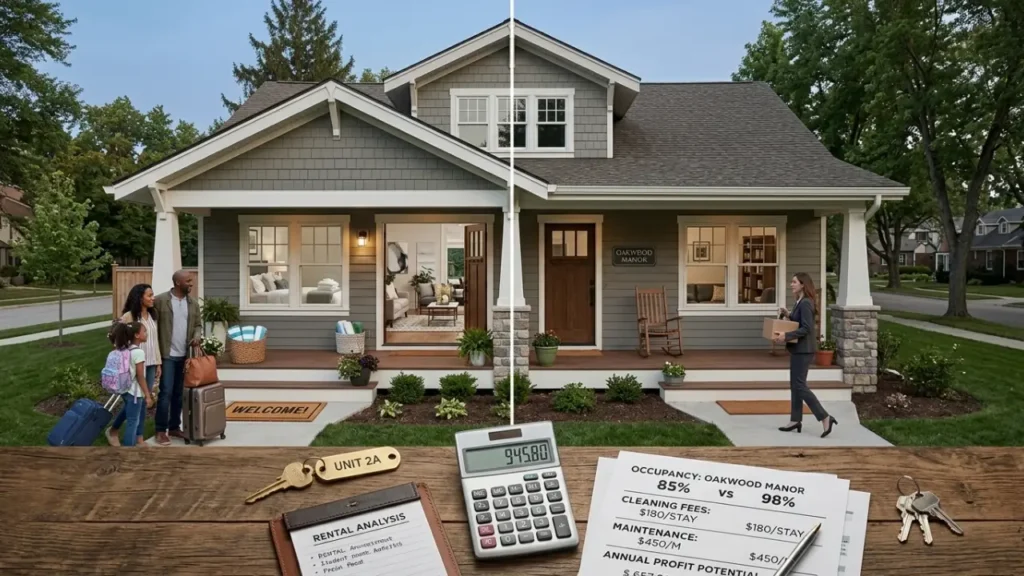
That may be good news for you if you were leaning towards Airbnbs in the renting vs. Airbnb debate. Let’s explore why short-term rentals have suddenly become more popular this year.
The short-term rental market has been evolving since 2021. It has been getting much easier to acquire these properties because mortgage rates have stabilized. You’re much more likely to be able to raise your rates, and more people want to stay in Airbnbs, according to AirDNA.
But all major markets experience periodic lags, especially after dramatic economic changes or shocks. The short-term rental market is no exception. There has also been an uptick in the number of people who want to stay in short-term rentals.
Trump’s administration passed the ‘Big Beautiful Bill’ in the second part of 2025. Since it restored Bonus depreciation, it allowed short-term hosts to capitalize on huge year-one tax savings. Many property owners and investors rushed to take advantage of this ‘great deal.’
The main reasons for the increase in demand for Airbnbs are the fact that Gen Z and even Millennials want experiential trips, often in more remote areas. More workers are working in remote and even hybrid positions–that allows them more opportunities for traveling. More people are traveling as families and in larger groups.
The luxury vacation market has always been lucrative. Demand in this segment remains strong well into 2026. WATG Research valued it as a $1.38 trillion market globally. It’s expected to be the fastest-growing luxury sector for the next two years.
According to Grand View Research, the general luxury market was worth $1.59 trillion last year. It’s projected to grow at 8.5% until 2033. More and more participants in the high-end travel market are Millennials, and even Gen Zers. Younger people have felt the economic pinch of declining Western geopolitical influence.
They value experiences more than expensive tangible goods because experiences create better and longer-lasting memories.
But don’t rush off to buy a lot of properties to convert into Airbnbs just yet. Keep in mind that it can be much more expensive to maintain them long-term. That’s just the nature of the short-term rental market.
Airbnb hosts also have much different cost structures than traditional property owners. That’s just one of the many factors you should consider in your research as you decide which direction to go.
Expect operating expenses to total approximately 35% of your total revenue if you go the traditional renting route. You’ll have a small opportunity cost because 5% of your rentals will be vacant each year. So, you will not be collecting any revenue on them.
You’ll spend about half of your pre-tax income on operating costs–buying furniture for properties, between-stay cleanings, and guest turnover–if you’re an Airbnb host, according to AirDNA.
Interestingly enough, Airbnb hosts tend to make a net profit of 8% when all expenses have been factored in. That figure is only 4% for traditional landlords.
You have to consider the following factors when deciding whether or not to become a landlord or an Airbnb host:
Nightly Rates versus Fixed Rate Revenue Models
You can generally raise (or lower) your rates based on travel demand, local events, and seasonal tourism as an Airbnb host. It’s because more people travel during the holidays, festivals, and peak seasons. Vacationers are willing to pay much more for prime short-term rentals.
If you’re a traditional renter, your tenants will sign a lease. All Airbnb hosts have their guests sign leases too. But rates tend to be locked in for several months, usually a year, with traditional leases.
You will probably charge competitive rates, which are influenced by the rates that landlords with similar properties nearby charge and how close the property is to the nearest major town.
Note that Airbnb rates tend to shift in tandem with changes in the market. That doesn’t tend to be the case for long-term property owners. Let me give you a good example of that in action.
You may have lost money if you owned long-term rentals in 2020 and 2021. The prices of homes rose dramatically during the pandemic years. So, property values increased much faster than rental prices did. However, short-term rental prices recovered and stabilized as demand returned to pre-pandemic levels.
Interestingly enough, long-term rental rates can seem to be more enticing when people don’t travel as much, or when more and newer short-term rental properties enter the market.
When is it Better to be a Long-Term Property Owner?

Long-term property owners may traditionally have had lower operating expenses. However, 2026 may bring them rude and surprising shocks. According to Avail, which is part of the realtor.com network, 74% of landlords found it more expensive to maintain rental properties in 2026.
Granted, higher taxes and insurance premiums accounted for most of the increase. The long-term rental market is tight with a more sluggish American economy. Avail recently did a survey and found that 18% of landlords were freezing rates, despite higher fixed operating costs.
Landlords receive a substantial monthly rental check and have a sizeable security deposit. That lets them cover property and personal expenses much more easily. You can build real savings from the financial stability that passive income can generate. Property owners don’t have to spend as much on cleaning because guest turnover is much lower.
Since long-term tenants tend to stay in a property for a few years, landlords can develop meaningful relationships. That builds real trust, which is important in the rental industry.
Avail found that 36.1% of landlords surveyed said that their tenants were staying in their rental properties for longer.
Also, tenants tend pay for utilities and regular cleaning. So, those are two expenses that landlords aren’t generally responsible for. Though they do have to pay for maintenance and repairs.
Long-Term Properties Tend to Appreciate More Often
Long-term rentals tend to increase in value over time. That means landlords can justify charging higher rates, sometimes abruptly.
Many Expenses are Tax Deductible
If you rent out long-term properties, you can deduct many expenses–mortgage interest, property taxes, maintenance, insurance premiums, and depreciation–on your tax returns. You’ll get to keep more of your passive rental income as profits (since you aren’t paying taxes on them).
Reduce Investment Risk By Diversifying Your Asset Portfolio
Investing in stocks and bonds can be a great way to generate passive income. But investing in the stock market is often very risky. The same applies to investing in a business. But since real estate is different, it behaves differently and has a much different risk profile than traditional assets.
You Call the Shots Regarding What Happens to Your Properties
You’re in control regarding what to maintain and repair and when to do so. The same applies to updating various aspects of your properties. You control tenant relationships. So, ultimately, you control your properties’ long-term values and outcomes.
What Are the Disadvantages of Being a Long-Term Landlord?
There are some cons to being a long-term landlord. Here they are:
Lower Income-Generating Potential
Long-term rental property owners don’t make as much income as Airbnb hosts do over the long-term. The reason is that landlords have a much lower tenant turnover than Airbnb hosts. So, there is not as much of an opportunity to generate passive income. You run the real risk of your tenant trying to break the lease if you suddenly raise the rates.
Fewer Properties to Rent Out
According to Estaga, most tenants move out of long-term rental properties three years after signing the lease. Every occupied property for a longer time period means that it can’t be rented out to another tenant.
Not All Tenants Are Angelic
Some tenants are deadbeats, meaning that they don’t always pay rent when due, and you may have to evict them through the courts. Also, many tenants don’t feel the need to clean their properties regularly, mainly because they don’t own them.
Maintenance and Repair Costs Can Add Up
Landlords are constantly maintaining and repairing their properties. Whether it’s landscaping, getting rid of mold, repairing a broken A/C unit, or cleaning after a tenant has moved out, there is always something that is bound to go wrong with your properties.
The expenses can add up significantly over time. And tenants can always have emergencies like a stove that suddenly breaks or a clogged drain. That eats into your passive income revenue streams.
Legal Responsibilities and Regulations
You must comply with housing laws, fair housing regulations, safety codes, and even rent control laws. Failure to do so could result in legal disputes with tenants or even your local city, fines, and various lawsuits. So, you must stay abreast of local laws and regulations and changes to them. You may need to consult with a lawyer to understand them since the law is complex.
The Time Investment and Stress Can Take Its Toll
You must be vigilant and have lots of time to deal with expected and unexpected headaches that tend to come with being a landlord. You’ll be responsible for collecting rent, taking care of maintenance issues and repairs, dealing with tenant complaints and issues, and filling out paperwork.
It helps to hire a property manager. However, that can create even more work for you since you’ll be managing an employee. Additionally, you’ll still be tasked with making key decisions, and managing all operations.
Being a Landlord Has Some Risks
Rates can change as the local real estate market and property values fluctuate. Recessions and depressions, natural disasters, and rising interest rates are some triggering factors.
Everything You Ever Wanted to Know About Airbnbs
Airbnb is trying to reposition its brand. When you hear the word ‘Airbnb’ you probably think about a platform where you can book a home or part of one for a few days. Well, now, younger generations look for experiences when they travel or vacation. Airbnb wants a slice of that huge pie.
So, now it’s revamping its image by overhauling its strategy and website. It’s offering guests access to hotels, delicious chef-prepared meals, outstanding and memorable experiences, operational tools, and much more.
That means you have a lot more to consider as an Airbnb host in 2026. While you will still be buying properties and furnishing them for short-term stays, you have to be more mindful about what guests (short-term travelers, business travelers, and tourists) are looking for when they book a stay in one of your properties.
Pros of Being an Airbnb Host
There are many perks associated with being an Airbnb host. I will list them now:
You Don’t Have to Pay to List a Property
You can list a property or home that you own on Airbnb’s site right away. That means you can start earning money much faster. It’s free to list. But Airbnb will charge you a service fee for each reservation you get.
You Have Lots of Flexibility and Control
You have a lot of freedom and options as an Airbnb host. You decide how to use your empty property or rooms to generate much appreciated extra income. You don’t have to set your rates according to market prices. Also, you can raise or lower your rates as much as you want (within limits) during peak and low demand.
Becoming an Airbnb host is a great way to enter into the world of entrepreneurship. You can also take your property off of Airbnb’s listings whenever you want. You may want to do that whenever friends or relatives visit.
Airbnb Protects You
Airbnb protects hosts to a certain extent. Airbnb takes care of payments and insurance for you. Airbnb makes sure that you get paid before guests stay in your property. Plus, Airbnb’s Aircover for Hosts Program vets guests immediately after they book with you. Aircover verifies identities, screens reservations, protects you up to $3 million for guest damages, offers hosts up to $1 million in liability insurance, and has a 24-hour safety hotline.
You Can Investigate Guests Pre-Arrival
Leverage Airbnb’s two-way review process. Guests can review the property they want to stay in. Hosts can investigate their guests beforehand. You can do some sleuthing to understand a particular guest’s track record of treating Airbnb properties. That will help you make a better decision as to whether or not you want the guest to stay in your property for a few days.
You can automate management tasks with Hospitable.com. Doing so gives you a real advantage by allowing you to automate the additional verification process. The good news is that Hospitable is compatible with Vrbo and Booking.com
You Protect Properties Better
Your properties are your assets. Being an Airbnb host may help you protect them and extend their lifespans because you’ll be cleaning and repairing them much more often.
Cons of Being an Airbnb Host
There are some drawbacks to being an Airbnb host that you should know about.
Airbnb Properties Are Often Subject to Strict Laws and Regulations
Some jurisdictions outlaw Airbnbs. Additionally, local laws tend to change constantly, often without notice. That’s why you need to check local zoning ordinances to understand if you’re even allowed to list your Airbnb.
Some cities require you to get a special permit or license to become a host. You should do lots of research to understand what the local legal requirements of becoming a host are before you start an Airbnb business.
Income Streams Are Often Unpredictable
Being an Airbnb host tends to be more lucrative than being a landlord long-term. However, you’ll find that income often fluctuates according to season as an Airbnb host. That will be especially true when you’re starting out because it will be very hard for you to attract guests since you’ll have no track record.
It will be even harder as a new host in a low demand area. Expect bookings to be sporadic and for properties with lower rates in that case. It’s almost impossible to predict when you will and won’t get a lot of bookings, especially if you’re new to the industry.
That’s why you need a strategy to get through inevitable slow seasons, a steady source of alternate income, or a steady job.
Hosting Airbnbs Will Eat Up Your Time
You’re running a business. So, you’ll need to invest many hours in customer service, customer relationship management (responding to customer questions and inquiries immediately), and be available 24/7 when guests are on your properties.
This is the only strategy that guarantees the perfect guest experiences that lead to happy customers, 5-star reviews, and ultimately, more bookings.
Hospitable and other automated platforms will free up more time for you by automating routine administrative and clerical tasks
Steep Property Management Fees
Third-party property management fees can eat up to 30% of your gross revenue. You’ll need to hire a third-party property management company to maximize your revenue generation potential.
Direct Comparison Matrix
| Feature | Airbnb Rentals | Long-Term Rentals |
| Duration of stay | Short-term, usually 3 days or less | Fixed leases, generally between 6-12 months |
| Rates | Daily, adjusted according to season | Monthly and fixed, according to the lease’s terms |
| Income generation potential | Higher nightly rates, but significantly higher operating expenses | Lower operating expenses, stemming from lower turnover |
| Demand and occupancy | Fluctuating occupancy, and seasonal demand | Long-term occupancy, and year-round demand |
| Local regulations and zoning restrictions | Strict local regulations and zoning restrictions | Standard tenancy laws and living standards |
| Wear and tear | Complex tax deductions, quarterly tax filings | Straightforward tax deductions, yearly filing |
Financial Breakdown: Evaluating True Profitability
Revenue Calculation Factors
The table below compares rents for a three bedroom property in a somewhat popular vacation market in America.
| Metric | Short-Term Rental | Long-Term Rental |
| Gross Annual Revenue | $48,000 to $72,000 | $24,000 to $36,000 |
| Operating Expenses (% of revenue) | 45-55% | 30-40% |
| Net Annual Income | $22,000-$40,000 | $14,000-$25,000 |
| Management Intensity | High (or outsourced) | Low to Medium |
| Vacancy Risk | seasonal/higher | Lower (1-2 turnovers a year) |
Note that you have the potential to earn even more as an Airbnb host in American tourist hotspots. Sometimes, you can earn 2-3 times as much as an Airbnb host than as a traditional landlord.
Airbnb Hidden Costs
As I mentioned earlier, short-term rentals are more profitable, generally speaking, than long-term rentals. However, the differences may be marginal.
Here are typical Airbnb expenses:
- Platform fees–3-5% per booking per Airbnb
- Cleaning fees–$75-$200 for each turnover. Expect 2-4 turnovers weekly during peak seasons.
- Supplies and restocking–Replacing broken items, toiletries, paper goods, linens, and other disposable items.
- Property management–Amounts to 15-35% of revenue when outsourced.
- Higher utility costs–More guests mean higher usage of utilities, especially during peak seasons.
- STR insurance–Airbnb insurance tends to cost 2-4 times as much in premiums when compared to standard landlord policies.
- Seasonal maintenance–Higher cleaning and maintenance fees and expenses due to more guest turnover.
- Dynamic pricing software–PriceLabs, Wheelhouse, Beyond, DPGO, and Airbnb Smart Pricing are not inexpensive.
Landlord Hidden Costs
It’s not inexpensive to rent long-term properties either. Here’s a list of common expenses for landlords:
Vacancy Drag
Vacancy drag occurs when a property sits idle for at least a month. A vacant property means that you’re not collecting a monthly rental check. But you’re paying property taxes and insurance on the property. Any utilities expenses for the property are coming out of your pocket as well.
You’ll be paying to heat an empty property during the winter. And you’ll be paying to monitor pipes in older properties. Then you have to pay for cleaning, energy bills, and maintenance. Suddenly, that empty rental is costing you two to three times the rental rate every month.
The U.S. Census Bureau states that the national vacancy rental rate for rental housing units was 7.3% this year. That figure may be substantially lower or higher in local and regional markets.
The typical monthly rate for a unit is $1,800. So, a vacant unit costs at least $1,512 annually, and that’s before you factor in turnover costs. It’s always wise to research the local rental market beforehand and set rates at the average market price. Then invest in tenant relations to keep turnover as low as possible. Remember that it often costs you more to rent to a new tenant than it does to renew a lease for an existing tenant.
Utility Bleed
Tenants generally pay for utilities. However, some landlords find it easier to rent when they pay for utilities. Either strategy ends up costing the landlord dearly. The first strategy can lead to properties staying vacant for longer and good tenants leaving when they find a property where the landlord will cover utilities.
The second strategy motivates tenants to waste costly utilities like water and gas since they’re not paying for these. The U.S. Census Bureau published the 2023 American Community Survey. According to it, the real median gross costing of renting (including utilities) increased by 3.8% in 2023.
2023 was the first year in 10 that rental costs were higher than real median home value increases. That impacts landlords because it means they’re constantly bleeding revenue. What’s more (and unsurprising) is that older single-family and small multifamily units spent the most on heating.
That’s crucial for landlords owning properties in colder northern areas who pay for utilities, especially in remote and semi-rural areas. They need a predictable energy supplier to keep their properties occupied during the winter months.
Landlords and tenants can have friction when tenants pay for utilities. In these instances, landlords are generally not incentivized to install energy-efficient appliances. That can infuriate tenants and lead to many good tenants leaving either before or when their first lease anniversary ends.
Deferred Maintenance Acceleration
Deferred maintenance tends to age exponentially. Small roof leaks tend to get much worse and much more expensive to repair quickly if not fixed immediately. That’s because roof leaks tend to damage decks, result in insulation needing replacement, and interior drywall needing fixing.
The same applies when landlords put off HVAC repairs, slow plumbing leaks, and siding issues. These issues can be avoided if landlords have the exteriors of their properties inspected and maintained/repaired in April and mechanical systems inspected in September. They should perform spot checks every time a lease is renewed.
Management Friction
Managing properties by yourself can be time consuming and very stressful. You’ll generally have a harder time finding good tenants and take longer to find them if you manage properties solo. You’ll have less leverage with vendors and you may make fatal mistakes when enforcing leases.
Potentially Costly Legal Mistakes
Laws governing how landlords can and can’t treat tenants are always changing. Landlords who fail to comply with these increasingly complex laws can face hefty fines or even be forced out of business.
You may violate the following laws and be completely unaware of it. That’s why it’s important to constantly consult with a lawyer and stay on top of local landlord laws:
- Fair Housing Laws
- Security deposits
- Notice requirements
- Assistance animal requirements
- Screening consistency
- Habitability standards
You can face crippling lawsuits if you unknowingly violate even minor laws. That’s why it’s always best to read the Fair Housing guidance literature for landlords that the U.S. Department of Housing and Urban Development (HUD) provides. Additionally, you can stay updated on landlord laws with educational resources from the Consumer Financial Protection Bureau (CFPB) Renting Resources.
You’re Losing Loads of Money When Tenants Are Always Moving Out
It’s called high tenant turnover, and it costs landlords lots of money. Here are some of the tenant expenses that landlords have to cover every moveout:
- Cleaning the rental unit.
- Painting the rental unit.
- Replacing carpet in the rental unit.
- Marketing expenses incurred when finding a new, quality tenant.
- Rent foregone when the property is vacant.
- Leasing commissions
Note: Tenants tend to stay in your properties longer and renew leases more often if you communicate with them regularly, fix maintenance issues immediately, and follow professional management practices.
Tenant turnover is sometimes unavoidable. That’s why you need to learn how to handle resident turnover smoothly. It will help lower your vacancy costs, allowing you to keep more of your hard-earned rental revenue.
Accounting and Finance Can Be Complicated
You should have a Certified Public Accountant (CPA) look at your books because the accounting and finance of managing rental properties are often complex and confusing. Here are the issues you’ll be dealing with regularly:
- Tracking expenses
- Drafting Owners’ statements
- Doing Security deposit accounting
- Preparing taxes
- Documenting vendor transactions
- Reconciling monthly expenses
Not having organized financial records can get you into deep trouble with the IRS and local tax authorities. It can also make for very stressful tax seasons and lead to inaccurate investment performance evaluations.
You should hire a professional management company to help you with the books because they’re experienced and knowledgeable in handling complex accounting and financial matters.
Ever Evolving Advanced Technologies
Tenants seek out technologically savvy landlords because these types of professionals communicate better, faster, and more efficiently. Here’s exactly how your business should be technologically integrated:
- Online applications
- Digital lease signing
- Paying rent online
- Communicating maintenance issues through portals.
- Fast communication
You can get overwhelmed quickly if you try to implement and manage all of these systems simultaneously as a landlord. These systems can also be very expensive to acquire and implement.
That’s why it’s best to hire a property management company. They have the resources and experience needed to manage these technologies successfully.
Eviction
It can be time consuming and expensive to evict a tenant, especially if you have to go through the courts as a landlord. You have to follow certain legal procedures. I’m going to explain the entire process now.
Expect to spend between $3,500 and $10,000 to evict a tenant in 2026 if you’re a landlord in America. Most of the expenses will stem from:
- Legal fees
- Lost rent
- Property damage
- Turnover expenses
A tenant who’s evicted can have his or her credit score drop from 50 to 150 points. The eviction will remain on record for the next seven years. Additionally, the tenant loses his or her security deposit, incurs substantial moving costs, and often faces difficulty in renting a new property.
TransUnion SmartMove data states that landlords spend an average of $3,500 to evict a tenant. However, there is a wide range: as little as $500 for simple and uncontested cases to as much as $10,000 for complicated legal disputes. More complicated cases are more expensive because they often involve legal fees, court costs, property turnover, and lost rent.
According to Research published in PNAS, about 2.7 million households are threatened with eviction notices annually.
Here are all of the costs that property owners incur, both directly and indirectly when they evict a tenant:
Direct Legal and Court Costs
Property owners generally pay about $600 to $2,000 for cases that don’t go to court. That range increases to $1,000 to $2,000 for cases that do go to court. Expenses for contested cases include:
- Court filing fees–$50-$500
- Service of processing fees–$30-$400
- Attorney fees–$300-over $5,000
Court Filing Fees
You can spend between $50 and $500 filing your case in court. Note that different jurisdictions have different filing fees. You’ll pay a higher court filing fee if your claim amount is higher.
Expect to pay a filing fee of $100 to $250 in most jurisdictions. According to Azibo, the average filing fee in America is $109. But that number can be much higher or lower, depending on where you live. Most of Maryland only charges $15 to file a court case. California charges $240 for cases with claim values less than $10,000.
You’ll pay $385 to file a case with a claim value between $10,000 and $25,000 in California. Claim amounts exceeding $25,000 have a filing fee of $435. You’ll pay $120 to file a superior court case. The filing fee in Georgia for uncontested evictions is $87, along with another $177 to $310.
Some Alabama counties charge as little as $276, and some as much as $350 to file a court case. Not surprisingly, filing fees don’t account for more than 10% of the entire eviction cost for cases.
Service of Process Fees
It generally costs between $30 to $150 to serve the first eviction notice. Expect to pay between $50 to $400 on the final eviction, part of which includes removal by a sheriff, serving the final notice, and escorting the tenant from the property. According to Azibo, it costs an extra $100 to $200 to replace the locks once you’ve evicted a tenant.
You have to pay a sheriff to serve the first eviction notice and again to physically remove the tenant.
Attorney Fees
You can pay between $300 to $100 on attorney’s fees to remove a tenant. That fee will increase exponentially to $150 to $400 an hour if you have to take the tenant to court. You may have to pay lawyers more than $5,000 in total legal costs if your case does go to court.
Lost Rental and Vacancy Costs
Most landlords lose $2,540 in the few months (203) that it takes to evict a tenant. Foregone rent is the largest (indirect) expense in eviction cases. It takes 7-16 weeks to successfully evict a tenant. That can be as high as many months in some states, according to LeaseRunner and TenantsUnion.
Findigs Vacancy Analysis finds that an apartment that’s vacant for even a month can cost the landlord as much as 8-10% in lost annual income. If a unit is vacant for a few months (2-3), expect to lose between $1,500 to $3,000 in total rent.
Property Turnover and Preparation Costs
You’ll have to spend significant money, between $1,750 to $4,000, cleaning an apartment after evicting a tenant. Tenants who get evicted are more likely to trash the property than tenants who leave on their own. You’ll have other substantial expenses: advertising, repairs, and releasing.
You’ll spend more money if the property is in bad condition. Expect move-out apartment cleaners to charge between $40-$60 an hour, according to Getflex. You’ll spend an average of $110-$350 to clean out most apartment units. That figure jumps to $450 to over $650 for larger houses.
You won’t be renting your properties out while you’re repairing them. That’s lost rental revenue income for you. Combine that with the money you’ll spend repairing the property, marketing the property to new tenants, and showing the property, and it’s easy to see how property turnover and preparation can get very expensive quickly.
You must factor new applicant screening fees into the property turnover and preparation costs. New applicant screening fees include background checks, credit reports, and fraud detection services. Expect to spend an average of $1750 preparing a property after you’ve evicted a tenant, according to TransUnion SmartMove.
Property Management and Eviction Fees
You’ll likely be dealing with a property management company if you ever need to evict a tenant. Expect to pay $300-$500 on admin fees to get the job done. Fees cover court attendance and tenant communication as well. However, many property management companies charge between $50 to $150 an hour to evict a tenant for you.
Just note that these companies bill you separately for serving tenant notices, attending court hearings, storing tenant belongings, re-keying locks, and managing repair work.
Evictions Can Cost You in Other Ways
Evicting a tenant is a time-consuming, difficult, and fairly costly process. You can get a bad reputation, especially if you constantly have lots of vacant listings because of numerous evictions. The eviction process can also divert time and resources that you could be using to maintain and manage properties that paying tenants occupy.
Also, remember that always having vacant properties often drives future quality tenants away. It gives them the impression that you don’t keep your properties up. Also, evicted tenants tend to leave bad reviews, which can ding your reputation badly.
Evictions Are More Expensive in Some States and Less Expensive in Others
It’s relatively inexpensive to evict tenants in some states and quite costly in others. That’s mainly because filing fees, legal requirements, and timelines vary by state. California (not surprisingly) is very costly. Direct fees run as high as $450. Contested cases can easily cost $10,000. The filing fee is as low as $15 in states like Maryland.
Expect to pay between $170 and $310 to file eviction paperwork in Georgia. Eviction filing costs $276 in Alabama. Filing and serving fees cost $200 in Florida. But you have three to six weeks to take non-responsive tenants to court, according to NumberAnalytics reports.
LeaseRunner’s research indicates that Texas tenants have at least 10 days to respond to an eviction notice before you can take them to court. You have to wait 5 days after a judgment is delivered to formally remove a tenant from your property.
Eviction timelines are different by state. You can evict a tenant in as little as three weeks in Washington state. The process takes a month to a month-and-a-half in California for uncomplicated cases. It takes three to six weeks to complete an eviction in Florida. It takes 7-16 weeks to evict a tenant anywhere in America.
Periodic Property Updates
The cost of property updates for long-term rental property owners is increasing dramatically as the cost of raw materials continues to skyrocket in 2026. Landlord insurance premiums are rising substantially this year as the weather becomes more unpredictable and violent, and as it gets more expensive to replace damaged parts.
More than a few landlords are seeing their insurance premiums increase by as much as 20% when they renew. That’s even true for those landlords who have never filed claims. That’s why landlords need to set aside 15% of their overall budgets to account for possible increases in insurance premiums
It’s pretty tricky to anticipate potential property updates. These are referred to as CapEx because they increase overall property values by making the property useful for longer. Examples of CapEx updates include installing new appliances, retrofitting a home for smart devices, installing a new roof, getting a new air conditioning or heating system, or completely remodeling a kitchen.
The cost of CapEx updates is treated as an accounting depreciation over the course of a set number of years. You need to audit the “Useful Life” of all of the systems in all of your properties to do CapEx depreciation correctly. “Useful Life” audits will also help you predict system failures better this year.
- HVAC Systems–Most air conditioning and heating systems last for 15-20 years. Plan on replacing your HVAC system if it’s approaching 20 years old.
- Water Heaters–Water heaters tend to work for 10-12 years before you need to replace them.
- Roofing–Most asphalt shingle roofs last 20-25 years.
Remember that inflation is high this year. Hedge yourself by adding a 5% increase to all materials and labor you plan on using for updates.
Best Rental Updates that Increase Property Values the Most in 2026
You can’t claim standard energy credits for rental properties in 2026 as a landlord. Fortunately, you can leverage the De Minimis Safe Harbor. It lets you deduct any upgrade costing less than $2,500 immediately. That includes smart locks, appliances, and thermostats.
You can depreciate larger rental property renovations that go over $2,500 for as long as you have the asset in your property.
You can raise your rates for updated rental properties.
I did mention that you could upgrade properties to be compatible with smart technologies. Your tenants will appreciate that since they’re convenient and let them stay connected with the outside world. Let me describe some of those now.
- Smart locks–Open and close doors from an app on a digital device. Now, there are no headaches associated with replacing lost or stolen keys. Showings will be much faster and more convenient as well.
- Smart thermostats–Control the heat from an app on a digital device. Eco-concsious tenants who want lower utility bills love these smart technologies.
- Video doorbells and security cameras–Now tenants can see who is approaching their properties before they open the door. It’s an extra layer of security for property owners and tenants that gives both parties more peace of mind.
- Smart lighting systems–Turn lights on and off when you enter a room with an app on a smartphone, voice commands, automated schedules, or wireless physical switches.
- Water leak detectors-These are the next generation of water leak detectors. They constantly check your home’s moisture levels. They check your home for abnormal water flows and freezing temperatures. You’ll get alerts of abnormal activity instantly on your phone. These detectors will shut the water off in your home if they detect a leak so that your home doesn’t flood.
- Smart smoke and carbon monoxide detectors–You’ll get instant alerts on your smart phone if there is a gas leak or a hidden fire hazard in your home if you’re not home. You’ll get loud voice messages serving as warnings if there are hazards present when you’re home.
- Smart plugs and outlets–Younger and eco-conscious renters want long-term rentals with smart plugs and outlets because they can be activated by an app on a mobile device. That makes them convenient for Gen Z and Millennials’ busy lives.
These plugs and outlets lower energy bills by using energy more efficiently.
Smart home devices make it easier for tenants and landlords by allowing properties to operate more efficiently. That lowers the costs associated with living in and managing these properties.
These devices can sense when a property is occupied and can adjust accordingly. For example, smart thermostats lower heating and cooling bills by automatically keeping buildings cooler, either only when it’s hot outside, or only when there are many people inside.
They encourage proper use of HVAC units as well. Smart homes are safer and more secure than conventional homes. That matters a lot for tenants and property owners. They discourage break-ins and theft. Their footage can be used as evidence in court and for other instances.
Smart entry sensors add another layer of security by letting tenants and property owners
know when a break-in is going to occur. That gives them enough time to call the police.
Smart homes tend to raise average rents by 5-15%. That’s because they appeal to people with money: young professionals, remote workers, and students.
Wrapping it Up
You can make more money as an Airbnb host, but that comes with much higher cleaning, maintenance, and repair costs because of higher turnover. Being a long-term rental property owner means income stability, but you do have the opportunity cost of foregone income. The path you choose in the renting vs. Airbnb debate depends on your preferences and risk tolerance levels.
FAQ
Which renting option generates more revenue?
You tend to make more money as an Airbnb host because the turnover is higher. Airbnb hosts tend to make two to three times as much revenue as long-term property owners.
Is it easier to manage Airbnb or long-term rental properties?
It’s easier to manage long-term rental properties because it involves less active daily management and work. It’s a more stable and steady source of passive income as well.
Are there any hidden or extra costs?
There are hidden and/or extra costs. Airbnb’s require hosts to spend lots of money furnishing STR properties. Hosts also spend more on cleaning, replacing items, and utility bills. Long-term rentals do have lower hidden and extra costs since tenants are responsible for cleaning and furnishing properties. They often pay for utilities as well.