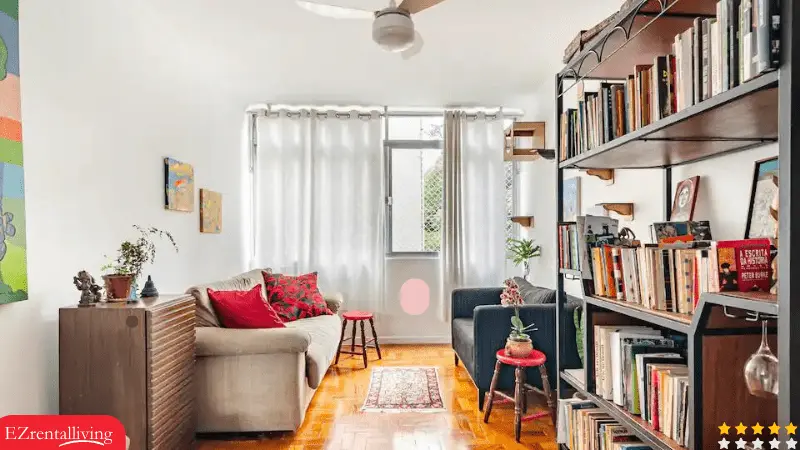
A new apartment can feel like a hotel room: clean, useful, and not quite yours. Making it feel like home is not about buying a lot of things. It is about familiarity, warmth, and routine — the small signals that tell your brain “this is my place.” Most of it is renter friendly, reversible, and cheap. For more practical rental advice, browse our Apartment Guides.
TL;DR: How to Make an Apartment Feel Like Home
- Unpack the familiar first — your blanket, photos, mug, and a scent you know.
- Warm up the light — switch off the harsh overhead and use three light sources at three heights, with warm 2700K–3000K bulbs.
- Personalise without drilling — lean art, use adhesive strips, removable wallpaper, and washi-tape frames.
- Soften it with textiles — throws, pillows, a rug, and curtains that touch the floor.
- Use scent and sound — the same candle or detergent as your old place, plus music.
- Make a comfort zone — one chair, one lamp, one good blanket.
- Add something living — one low-maintenance plant.
- Settle into a routine — cook, sit in the same spot, and get to know the building.
Start With What’s Familiar
The fastest way to make a rental feel like home is to unpack the things that already feel like you — before the boxes and the “proper” decorating.
Start with your favourite blanket, your pillow, a few photos, your mug, and the book you are reading. Put them where you will use them: the blanket on the sofa, the photos where you will see them in the morning, your mug in the cupboard you reach for first.
Scent works the same way. If you used a particular candle, detergent, or soap at your old place, bring it with you. Smell is the sense most tied to memory, and a familiar scent can make a strange room feel settled. Use the same detergent for your first wash and your bedding will smell like home from night one.
If you are still mid-move, how to move into an apartment covers the first-night box and unpacking order.
Walls Without Losing Your Deposit
Blank walls are the biggest reason an apartment feels temporary. You do not need to drill, paint, or risk your deposit to fix them.
Lean it. A large framed print, mirror, or canvas leaned against the wall on top of a dresser looks deliberate and costs nothing in damage. A mirror near a window also bounces light around — see how to make a small apartment look bigger.
Use adhesive hanging strips. Removable strips hold most framed prints and come off cleanly if you pull the tab straight down. They are not for heavy mirrors, and they do not stick well to textured walls or steamy bathrooms.
Try removable wallpaper. One accent wall can change a whole room, and it peels off when you leave. Ask your landlord first and test a hidden patch. If you are unsure, skip adhesive and use textiles instead.
Make washi-tape frames. Washi tape — coloured paper tape from a craft shop — sticks to paint without marking it and peels off cleanly. Use it to frame photos or postcards directly on the wall.
Before you paint or drill, check your lease — many ban it outright. Keep the original bulbs, fixtures, and hardware in a labelled bag so you can restore everything at move-out.
Light — the Biggest Cozy Lever
If you change one thing, change the light. Harsh overhead lighting is the biggest reason a room feels cold, and it is also the easiest thing to fix.
Turn the overhead off and use three light sources at three heights instead: a floor lamp in a corner, a table lamp on a side table, and a candle or string lights at low level. That layered light is what makes a room feel warm in the evening — one bright ceiling bulb can never do it.
Choose warm bulbs, 2700K–3000K, for every lamp you use after dark. Cool daylight bulbs (4000K and above) are fine for a desk in the morning, but in a living room at night they make everything look like an office.
Plug-in sconces stick to the wall, plug into a normal socket, and give soft wall light with no wiring. String lights along a shelf do the same job cheaply.
Textiles, Rugs and Comfort Zones
Hard floors, bare windows, and empty sofas feel cold because they are cold — to the touch, to the ear, and to the eye. Textiles fix all three at once.
A rug is the fastest single change you can make. It defines a zone, softens echo, warms bare feet, and ties the colours in a room together. Choose one big enough that the front legs of your sofa or bed sit on it; a rug that is too small makes the whole room look wrong.
Throws and pillows do the rest. One throw folded over the arm of the sofa, two pillows you actually like, and a cushion on the bed are enough. Three well-chosen pieces look calmer than ten.
Curtains matter more than most people expect. Hang them high and wide — four to six inches above the window frame and six to twelve inches wider on each side — in a light fabric that just skims the floor.
Then make a comfort zone: one chair, one lamp, one blanket, and a small table for a book or a cup of tea. The point is to have one spot for unwinding, not working or scrolling.
Scent, Sound and the Five Senses
Home is not just a look. It is a feeling, and that feeling comes through all five senses.
Scent. Pick one scent for your home and keep it consistent: the same candle, room spray, or detergent. Light the candle at the same time each evening and your brain will start to associate that smell with being home and switching off. Open the windows for ten minutes a day too — fresh air stops a small apartment from smelling stale.
Sound. Silence can make a new apartment feel empty. Put music on while you cook, or use a rain-sounds app at night if the building is noisy.
Touch and taste. Soft things — a throw, a rug under bare feet — tell your body the place is comfortable. Cook something in the first week, even if it is just toast and tea. A kitchen you have cooked in stops being a showroom and starts being yours. This is the hygge idea, in plain terms: warmth, soft light, familiar smells, and small comforts, repeated daily.
Plants and Nature
One living thing changes a room more than a shelf of ornaments. A plant in the corner makes a space feel alive and cared for, and it gives you a small daily ritual.
Start with something hard to kill. A snake plant survives low light, irregular watering, and neglect. A pothos trails nicely from a shelf. If your apartment is dark, our guide to the best indoor plants for apartments lists low-light plants that survive in a rental, including pet-safe ones.
Keep it simple: one tall plant in a corner and one small one on a shelf is enough.
Routine, Organisation and Community
The last part of making an apartment feel like home has nothing to do with shopping. It is routine.
Do the same small things in the same places: coffee in the same chair, dinner at the table, a walk around the block after work. Within a week or two those repetitions turn a strange flat into a place your body knows.
Get organised from the start, before clutter builds up. Give everything a home in the first week. Our guide on how to organize a small apartment has systems that actually stick, including the one-in-one-out rule.
Then connect with the building. Introduce yourself to a neighbour, learn where the bins go, and find the nearest shop, park, and coffee place. Knowing the people and places around you turns an address into a neighbourhood — and a neighbourhood into home.
If you want the styling side — spend-versus-save choices and the three-colour palette — see how to decorate an apartment on a budget. This guide is about the feeling; that one is about the look.
Cozy on $0, $50 or $150
You do not need a budget to make an apartment feel like home.
| Budget | What to do |
|---|---|
| $0 | Unpack the familiar first; rearrange what you own; turn off the overhead light and use lamps you already have; open the windows daily; start a routine |
| $50 | One warm lamp or string lights; a throw and one cushion; a candle in your home scent; a snake plant or pothos; washi tape to frame photos |
| $150 | A rug big enough for the room; curtains hung high and wide; two lamps at different heights; a plant and a pot you like; bedding you actually love |
Start at $0. If the apartment still does not feel like home after a week of familiar things, warm light, and routine, spend the $50. The $150 version is for when you know you are staying — not for the first weekend.
FAQ: How to Make an Apartment Feel Like Home
How can I make my apartment feel like home without spending money?
Unpack personal items first, use the lamps you already own instead of the overhead light, rearrange the furniture you have, open the windows daily, and build a small routine — coffee in the same chair, dinner at the table.
How do I make a rental feel cozy without losing my deposit?
Use renter friendly decor: lean art and mirrors, adhesive hanging strips, removable wallpaper, washi-tape frames, and textiles. Check your lease before painting or drilling, and keep the original bulbs and hardware to restore at move-out.
What is the fastest way to make an apartment feel homely?
Warm the light first — switch off the overhead, use two or three lamps with warm 2700K–3000K bulbs — then add your blanket, photos, and a familiar scent. Those three changes take an evening.
How do I make a small apartment feel cozy, not cramped?
Use one rug to define a zone, keep to a calm palette, add soft textiles instead of more objects, and use warm low light rather than a bright overhead.
How long does it take for an apartment to feel like home?
Usually two to four weeks. The decorating helps on day one, but the feeling mostly comes from routine and from knowing your neighbours and neighbourhood.
Final Thoughts
How to make an apartment feel like home comes down to three things: what is familiar, what is warm, and what is repeated. Unpack the things that already feel like you, soften the light and the surfaces, add one living thing, and then live in the place. The decorating helps, but the routine is what turns a rental into home.
Start tonight: turn off the overhead, light a candle, put your blanket on the sofa, and sit down.