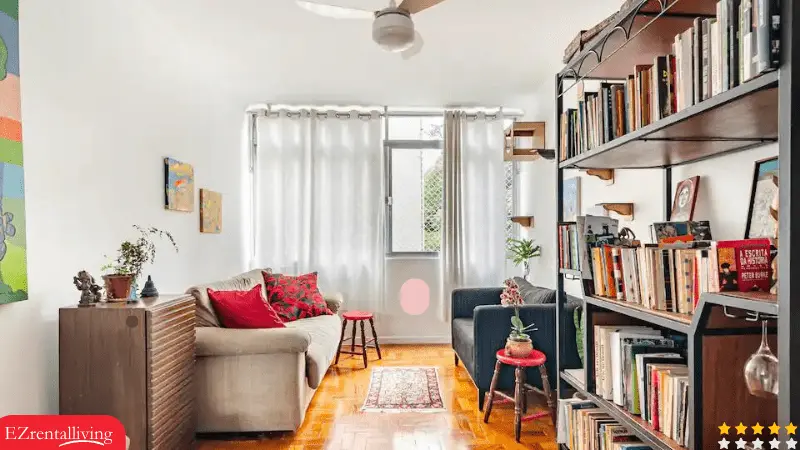
A small apartment is not hard to organize because you own too much. It is hard because everything is visible, every surface does two jobs, and there is nowhere for the overflow to hide. The answer is not more bins. It is fewer things, a clear home for everything that stays, and a system you can keep up in ten minutes a day. For more rental advice, browse our Apartment Guides.
TL;DR: How to Organize a Small Apartment
- Declutter before you buy anything — sorting first tells you what storage you actually need.
- Sort by how often you use things, not by category alone: daily items at eye level, weekly items within reach, rarely used items up high or out of the way.
- Zone the apartment by activity — sleep, cook, work, relax — so each area has one job and one set of things.
- Go vertical and use hidden space: tall shelves, under-bed storage, over-door hooks and drawer dividers.
- Give everything a labelled home, then do a 10-minute daily reset to keep it that way.
1. Start by Decluttering, Not Buying Bins
Buying storage before decluttering is the most common mistake in small apartment organization. Bins hide the problem for a week, then you own the same clutter plus the bins.
Work one small area at a time — one closet, one kitchen drawer, one junk drawer — and sort everything into four piles: keep, donate or sell, recycle or bin, and relocate (it belongs in another room). Ask one question per item: have I used this in the last year, and would I buy it again today? If the answer to both is no, let it go. Seasonal and sentimental items are the exception, not the excuse.
Do not try to declutter the whole apartment in a day. One drawer or shelf a day, for a week, is faster in practice because you actually finish it. Bag donations straight away and put them by the door, or they drift back onto shelves.
2. Sort by Frequency of Use
Once you know what is staying, sort it by how often you use it. This one rule decides where almost everything should live.
- Daily: keys, phone charger, mug, toothbrush, work laptop. These belong at eye level, by the door, or on the surface where you use them.
- Weekly: vacuum, laundry supplies, a favourite pan, gym kit. These belong within easy reach, but not on display.
- Monthly or seasonal: spare bedding, winter coats in summer, holiday decorations. These belong up high, under the bed, or on top of wardrobes.
- Rarely: documents, spare parts, keepsakes. These belong in one labelled box, not scattered through five drawers.
If a daily item lives in a hard-to-reach place, you will stop putting it back. That is how clutter returns. Move the item, not your habits.
3. Zone the Apartment by What You Do There
In a small apartment, rooms overlap. A living room is also an office, a dining room and a gym. Zoning gives each activity a place, so its things stop spreading everywhere.
Sketch your apartment and mark the zones: sleep, cook, eat, work, relax, and get ready. Then check that each zone holds only what that activity needs. Work papers live in the work zone, not on the kitchen counter. Gym kit lives by the door or in one basket, not on the sofa.
You do not need walls or room dividers to zone a space. A rug, a lamp, a shelf or a change in furniture direction is enough of a signal. If you are choosing between layouts, our guide to a studio apartment vs 1 bedroom explains how much zoning each layout realistically allows.
4. Go Vertical and Use Hidden Space
Floor space is limited in a small apartment. Wall space and hidden space are not.
Tall, slim shelving that runs close to the ceiling stores far more than a low, wide unit and draws the eye upward, which also makes the room feel taller. Keep everyday items at eye level, weekly items on the middle shelves, and rarely used things at the top. In the kitchen and bathroom, stack, hang and use the backs of doors before buying another wide unit.
Hidden space is just as valuable: under the bed for out-of-season clothes and spare bedding, the top of wardrobes for rarely used boxes, and the inside of cupboard doors for cleaning supplies. A bed with drawers underneath, or a storage ottoman, does two jobs at once. For more on choosing furniture that earns its place, see how to furnish an apartment on a budget.
5. Room-by-Room Storage: Kitchen
The kitchen is where small apartment storage ideas pay off fastest, because it holds the most small, awkward items.
Group by task: cooking (pans, oils, spices near the hob), prep (boards, knives, mixing bowls near the counter), and cleaning (cloths, spray, bin bags under the sink). Use drawer dividers for cutlery and utensils, stackable shelves inside cupboards to double the usable height, and hooks on the inside of cupboard doors for measuring cups and lids.
Keep counters as clear as you can. One rule helps: only daily-use appliances stay out. Everything else — the blender you use twice a month, the spare mugs — goes in a cupboard. A clear counter makes a small kitchen feel twice as big, and it makes cooking faster.
6. Room-by-Room Storage: Bedroom and Closet
A small closet works when it is organized by frequency and visibility, not just by hanging everything in a row.
Hang the clothes you wear most at eye level, in one direction, grouped by type. Use slim, matching hangers — they save several inches across a rail. Fold bulky jumpers and jeans on shelves instead of hanging them, and use shelf dividers so stacks do not topple. Shoes go on a vertical rack or in labelled boxes, not in a pile on the floor.
Use the space above the rail for out-of-season clothes in labelled boxes, and the space below it for shoes or a small drawer unit. A 10-minute weekly closet reset — rehang anything that drifted, return stray items to their zone — stops a small closet from sliding back into chaos.
7. Room-by-Room Storage: Living Room, Entryway and Bathroom
Living room: Give the room one storage piece per zone — a basket for blankets by the sofa, a tray for remotes on the coffee table, a shelf for books. Cables are a common source of visual clutter: a small cable box or a clip behind the TV stand hides them in minutes.
Entryway: This is the smallest zone and the one that clutters fastest. It needs a hook for your bag and coat, a small tray or bowl for keys, and a shoe rack or tray by the door. If shoes have no home here, they will spread across the whole apartment.
Bathroom: Use vertical space ruthlessly — a shelf above the toilet, a hanging organizer on the door, stackable trays inside the vanity. Keep only daily products on the counter; everything else goes in a labelled basket or drawer. Decanting is optional; labelling is not.
8. What to Buy First — and What to Skip
Do not buy a full organization system in one trip. Buy in this order, only after decluttering:
| Buy first | Why it works | Skip for now |
|---|---|---|
| Drawer dividers | Stop drawers becoming junk drawers | Matching decorative baskets |
| Hooks and over-door racks | Use space you already have | A new shelving unit |
| Under-bed boxes | Hide seasonal items cheaply | Stackable bins in every size |
| Labels | Make the system obvious to everyone | Colour-coded systems |
| One tall, slim shelf | Adds vertical storage | Wide, low storage units |
Measure before you buy anything. In a small apartment, a shelf that is two inches too wide is unusable, and returning it costs a trip. Buy one piece, live with it for a week, then decide what is still missing.
9. Keep It Organized: The 10-Minute Daily Reset
Organization fails without maintenance, and maintenance fails when it takes too long. The daily reset is the system that keeps all the others working.
Set a timer for ten minutes each evening and do three things: return everything to its zone, clear one surface completely, and take out anything that belongs in the bin or by the door. Do not deep clean. Do not reorganize. Just reset.
Pair it with a habit you already have — after dinner, or before bed — so it happens without deciding. A weekly 30-minute reset, on the same day each week, handles the bigger jobs: laundry, fridge, one drawer or shelf. If you are moving into a new place, start with our first apartment checklist so you set the zones up right from day one.
10. Organizing With a Partner, Roommate or Kids
A system only one person understands is not a system. Agree the zones together, label them clearly, and keep the rules simple enough that anyone can follow them: shoes by the door, keys in the tray, dishes in the sink, not on the counter.
Give shared spaces one owner for the reset — not forever, but for the week — and rotate. If something keeps ending up in the wrong place, the system is wrong, not the person. Move the home for that item to where it actually lands, and the problem usually disappears.
11. When It Still Feels Messy
If you have decluttered, zoned and labelled and the apartment still feels messy, check three things. First, is there a flat surface with no job? Every surface needs a purpose, or it becomes a dumping ground. Second, is something stored where you use it, or where it looks tidy? Storage that is inconvenient will not be used. Third, do you have a “maybe” pile? Decide on it now — keep it in a labelled box with a date, and donate it if you have not opened the box in three months.
Small apartment organization is not a one-time project. It is a set of small decisions, repeated daily, that keep a small space working. Start with one drawer today, and let the system grow from there.
FAQ: How to Organize a Small Apartment
Where do I start organizing a small apartment?
Start with one small, visible area — a junk drawer, the entryway, or one kitchen cupboard — and declutter it fully before buying any storage. A quick win shows you what the system should look like, and it tells you what storage you actually need.
How do I organize a small apartment with no storage?
Use the space you already have: go vertical with tall shelves, use under-bed and over-door storage, and hang things on the backs of doors. Multi-purpose furniture — a bed with drawers, a storage ottoman — adds storage without adding floor space. Decluttering first matters even more when storage is scarce.
What is the best way to keep a small apartment organized?
Give everything a labelled home, sorted by how often you use it, and do a 10-minute daily reset. The reset is what keeps the system working; without it, even the best storage fills up again within a week.
How can I make a small apartment look bigger and more organized?
Clear surfaces, light colours and vertical storage all help. Our guide on how to make a small apartment look bigger covers mirrors, light and furniture choices that open up a small space, and the organization systems here keep it that way.
How often should I declutter a small apartment?
Do a small declutter every season — four times a year — and a quick check whenever you bring something new home. A simple rule helps: one thing in, one thing out, especially for clothes, kitchen gadgets and books.
Final Thoughts
Organizing a small apartment is not about buying the perfect set of bins. It is about owning less, knowing where everything lives, and resetting for ten minutes a day. Declutter first, zone by activity, go vertical, and label everything. Pick one drawer or one zone today, finish it properly, and build from there — the rest of the apartment will follow.