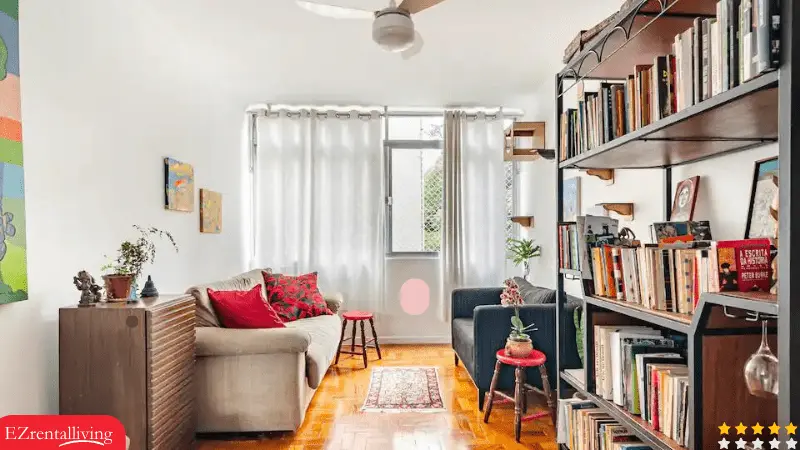
A studio apartment and a one-bedroom apartment offer two different ways of living. A studio is open, simple, and cheaper. A one-bedroom gives you walls, privacy, and breathing room — at a higher price.
Neither is better for everyone. The right choice depends on your budget, how you work, who you live with, and how much time you spend at home. This guide compares rent, size, privacy, storage, and everyday livability, so you can decide before you sign a lease.
TL;DR: The Quick Answer
Choose a studio if you live alone, you are on a tight budget, you want a space that is easy to clean, you spend most of your time out, or you only need a place for a short stay.
Choose a 1-bedroom if you live with a partner, you work from home, you want a separate bedroom with a door that closes, you entertain guests often, or you plan to stay long-term.
What Is a Studio Apartment?
A studio apartment is a single open-plan living space. Your bedroom, living room, and kitchen share one room. Only the bathroom has walls and a door.
There is no separate bedroom. Your bed might sit in a corner, behind a bookshelf, or behind a curtain — but it is still part of the room where you cook, eat, and relax.
Most studios are 300 to 600 square feet. They suit solo renters, students, and young professionals who want a great neighborhood without paying for space they do not need. They are also cheaper to heat, cool, and clean.
If you are new to renting, our Apartment Guides cover the basics of finding and settling into your first place.
What Is a 1-Bedroom Apartment?
A one-bedroom apartment has a separate bedroom with walls and a door, plus a separate living room and kitchen. You can close the bedroom door and keep your sleeping space private.
Most one-bedroom apartments are 500 to 800+ square feet. That separate room means a guest can sleep on the couch while you sleep in peace, and one person can work while the other rests. Your bed is never also your office and dining table.
For couples, remote workers, and anyone who values privacy, that wall makes a real difference.
Studio Apartment vs 1 Bedroom: Comparison Table
| Feature | Studio Apartment | 1-Bedroom Apartment |
|---|---|---|
| Typical size | 300–600 sq ft | 500–800+ sq ft |
| Layout | Open-plan living, one main room | Separate bedroom, living room, kitchen |
| Privacy | Low — no separate bedroom | High — bedroom door closes |
| Typical rent | $200–$600 less per month | Higher |
| Utilities | Lower | Slightly higher |
| Storage space | Limited closets and wall space | More closets and cabinets |
| Cleaning time | Faster | Longer |
| Guests | Awkward — no private sleeping area | Easier — guests use the living room |
| Work from home | Hard — no separation | Easier — desk away from the bed |
| Best for | Solo renters, minimalists, short stays | Couples, remote workers, long-term renters |
Cost Comparison: How Much Cheaper Is a Studio?
In most US cities, a studio rents for $200 to $600 less per month than a comparable one-bedroom in the same area. In expensive cities, the gap can be $700 or more.
Saving $300 a month is $3,600 a year. Saving $500 a month is $6,000 a year. That is money for savings, travel, or simply less financial pressure.
Studios also cost less to run — often $20 to $60 less a month for utilities — because there is less space to heat and cool. If your place runs hot, see how to vent air in an apartment and why your apartment is so hot.
Deposits are usually tied to rent, so a studio often means a smaller deposit, and the lower rent can make it easier to pass income checks.
A studio also needs less furniture. Furnishing a one-bedroom can cost $500 to $2,000 more. For budget-friendly ideas, see how to furnish an apartment on a budget.
| Cost | Studio | 1-Bedroom |
|---|---|---|
| Monthly rent | $1,200 | $1,500 |
| Monthly utilities | $90 | $130 |
| Monthly total | $1,290 | $1,630 |
| Annual total | $15,480 | $19,560 |
That is $4,080 more per year for the one-bedroom in this example. Your numbers will vary, but the pattern holds.
Size and Layout
Square footage matters, but layout matters just as much. A well-designed 450-square-foot studio with good light and smart storage can feel bigger than a poorly laid out 600-square-foot one-bedroom.
In a studio, every square foot is shared. Your bed is in your living room, and cooking smells drift into your sleeping area. In a one-bedroom, walls create zones: you sleep in one place, relax in another, and cook in a third. That separation helps you switch off at night and focus during the day.
Tour both types in person if you can. Stand in the space, imagine your furniture in it, and ask: could I live here every day?
Pros and Cons of a Studio Apartment
Pros
- Lower rent and utilities, often saving thousands per year
- Less to clean — one main room, not several
- Less to furnish
- Forces you to declutter
- Open-plan living feels bright and social
- Great locations for less money
Cons
- No privacy — no door to close
- Hard for couples sharing one room
- No guest space
- Cooking smells reach your bed and clothes
- Work from home is tough — your desk is next to your bed
- Limited storage space
Pros and Cons of a 1-Bedroom Apartment
Pros
- Real privacy — a bedroom door you can close
- Better for couples and different schedules
- Better for working from home
- More storage space and closets
- Easier to host guests
- Better for long-term living
Cons
- Higher rent, typically $200–$600 more per month
- Higher utilities
- More to clean and furnish
- Extra space can fill with clutter fast
Who Should Choose a Studio Apartment?
A studio is a great fit if you live alone, are on a budget, love minimalism, are staying short-term, want a prime location, or work outside the home and do not need a home office.
If that sounds like you, a studio can be a smart, simple, and affordable choice. Many solo renters live happily in studios for years.
Who Should Choose a 1-Bedroom Apartment?
A one-bedroom is usually better if you live with a partner, work from home, value privacy, entertain guests, plan to stay long-term, or own a lot of stuff — hobbies, equipment, books, or a wardrobe that needs real closet space.
If any of these apply, the extra rent is usually worth it. You will use that bedroom every single day.
What Is a Junior 1-Bedroom? Watch Out
A “junior one-bedroom” is not a true one-bedroom. It is usually a large studio with a sleeping alcove — a nook or partial wall, often with no door and sometimes no window.
It can be a nice middle ground, but do not pay one-bedroom prices for it. Check: is there a door? A window in the sleeping area? Is the bedroom fully walled off, or just an alcove? If not, it is a studio with a fancy name. Price it like one.
7 Questions to Ask Yourself Before Signing a Lease
- Who is living here? Two people in a studio is doable, but tight.
- Do I work from home? If yes, a one-bedroom makes it easier to separate work from rest.
- What is my real budget? Look at the annual difference, not just the monthly rent.
- How much stuff do I own? If it already fills a room, a studio will feel cramped.
- How long will I stay? Short stay: a studio is low-commitment. Two years or more: extra space pays off.
- Do I host guests? If yes, a separate living room matters.
- Location or space? A studio in a great neighborhood versus a one-bedroom farther out is a real trade-off.
If you are weighing a short stay or shared space, learn what a private room on Airbnb means and whether you can book Airbnb for someone else.
Final Verdict
Choose a studio if you live alone, watch your budget, and are happy with a simple, open space. You will save money, clean less, and live lighter.
Choose a 1-bedroom if you share your life with someone, work from home, or want a door you can close at the end of the day. The extra cost buys privacy and comfort you will notice daily.
Decision checklist: compare the total annual cost, think about who lives there day to day, decide if you need a separate workspace, tour both types, check the storage, and confirm it is a true one-bedroom — not a junior one-bedroom. The best apartment is the one that works on ordinary days.
FAQ: Studio Apartment vs 1 Bedroom
Is a studio apartment cheaper than a 1-bedroom?
Yes, almost always. A studio typically rents for $200–$600 less per month, with lower utilities too — a saving of $3,000–$6,000 or more per year.
Can two people live in a studio apartment?
Yes, but it is tight. Sharing one open room means no privacy and little room for two people’s belongings. Most couples are happier in a one-bedroom, especially long-term.
Is a studio apartment good for working from home?
It can work, but it is harder. Your desk sits in the same room as your bed, so switching off is difficult. Full-time remote workers usually do better in a one-bedroom.
How big is a studio vs a 1-bedroom apartment?
A typical studio is 300–600 square feet. A typical one-bedroom is 500–800+ square feet. The key difference is layout: a one-bedroom has a separate room with a door.
Which is better for couples: a studio or a 1-bedroom?
A one-bedroom is better for most couples. The separate bedroom gives each person privacy, makes different sleep schedules easier, and makes hosting guests far more comfortable.
Written by Chris for EZ Rental Living — practical guides for renters who want a home that actually works.